Fractional CROFractional CTOLeader advisoryBuilt to Exit

Your company grows at the speed of the person leading it.

I help founders leverage systems so their leadership goes further. That means the revenue engine, the AI underneath it, and the leader running both.

Inner ring: people · Outer ring: systems · Everything routes through the center
Working stack
CRM & AI
  • HubSpot
  • HubSpot Breeze
  • Claude
  • ChatGPT
  • Hermes Agent
  • OpenClaw
  • Grok
  • CharlieAI
Calls & calendars
  • Aloware
  • Dialer.io
  • SalesKick
  • OnceHub
  • Calendly
  • Zoom
  • Fathom
Payments & finance
  • Stripe
  • Whop Payments
  • QuickBooks
  • Shopify
Automation & comms
  • Zapier
  • Make
  • Slack
  • Google Workspace

…and many more. If your team runs on it, I've probably connected it to a CRM.

The practice
The pipeline, the comp plan and the AI stack all inherit the habits of the person at the top. So I work on all three, and on you.

Most growing companies hire for the symptom. A sales leader for the missed quarter. A developer for the broken integration. A coach for the founder who hasn't slept. Each one sees a third of the problem, and the three rarely talk.

I've spent my career inside revenue teams, building the systems they run on and leading the people who use them. I design the sales process, the commission plan and the CRM. I build AI systems that run in production with real money on the line. And I sit with the person at the center when the decisions get heavy.

Your judgment can only be in one room at a time. Well-built systems carry it into every other room: the pipeline review you skipped, the commission run you never check, the follow-up an agent drafts at midnight. That is how one leader's standards reach a team of fifty.

The center of gravity is human. The systems are how we prove the change took. When a leader gets clearer, the forecast gets more honest, the team gets braver, and the software finally reflects how the business actually works.
The method

Architecture first. Then the engines. Then AI.

This is the system I build inside HubSpot. Each layer depends on the one beneath it. That's why companies that buy AI tools and point them at messy data rarely get what they paid for.

1Foundation

CRM architecture

Underneath every engine is the schema: what each object is, how records relate, what every field means, and which system owns it. It's my core expertise, and it's the step most companies skip.

Object & association modelProperty dictionaryLifecycle & pipeline definitions One system of record per data typeBilling, books, calendar & phone integrationsPortal audit & cleanup
CONTACTCOMPANYDEAL MEETINGPAYMENTCALL lifecyclestageannualrevenuedealstage hs_meeting_outcomepayment_statushs_call_disposition
2Engines

Four revenue engines, built on the schema

Each engine owns one stretch of the customer's path, from first inquiry to cash in the bank, and hands a clean record to the next.

New lead → Contacted Setter Engine

Speed to lead

Every inbound lead is owned, routed and called within minutes, with a record of every attempt.

  • Lead routing and delegation rules
  • Speed-to-lead alerts and SLAs
  • Call cadences with logged dispositions
  • Setter scorecards
MeasuresTime to first touch · Connect rate
Contacted → Meeting held Appointment Engine

Calendar efficiency

Booked meetings that actually happen, on calendars that stay full and organized.

  • Booking synced to the right owner
  • Confirmation and reminder sequences
  • No-show and reschedule recovery
  • An outcome logged on every meeting
MeasuresShow rate · Calendar utilization
Opportunity → Closed Closer Engine

Deal recovery & nurture

A pipeline with real exit criteria, follow-up that never lapses, and a way to bring stalled and lost deals back.

  • Stages with defined exit criteria
  • Follow-up and nurture sequences
  • Dormant and lost-deal reactivation
  • Closer scorecards and forecast hygiene
MeasuresClose rate · Recovered revenue
Closed → Cash collected Revenue Engine

Payment & AR data

Every dollar tied to the deal and the customer that produced it, from first payment through refunds.

  • Payments linked to deals and contacts
  • AR aging and collections workflows
  • Refunds, clawbacks and commission data
  • Reconciliation from CRM to the books
MeasuresCash collected · Days sales outstanding
3Intelligence

AI, once the company is AI-ready

When the data is clean and defined in a schema, the company is AI-ready. AI is only as good as the records it reads, so this layer comes last and works from day one.

Custom AI

Agents built for your business

Purpose-built agents that qualify, follow up, reconcile and report inside your systems, with a human approving what matters.

Hermes AgentOpenClawGrok
Enablement

Your team, fluent in AI

OpenAI and Anthropic tools rolled out with real workflows, training and guardrails, so adoption lasts past the first month.

ChatGPTClaude
Native AI

The AI inside HubSpot

HubSpot's built-in AI configured on clean data, so the assistants and agents you already pay for give answers you can trust.

HubSpot Breeze
The result

Built to Exit.

Clean architecture, working engines and AI on top add up to a company that runs on systems instead of on you. That's what makes an exit possible, whichever exit you want.

See Built to Exit
Exit one

Out of the day-to-day

Step back from operations and lead from where you add the most. The business keeps its standards without you in every room.

Exit two

By acquisition

Hand a buyer verifiable data and a company that runs without its founder, the two things that raise enterprise value.

Built on this architecture CommissionIQLive commission software running on Revenue Engine data, with refund clawbacks and QuickBooks billing. Reactivation EngineAn AI agent that finds dormant and lost deals and drafts the outreach to win them back. Revenue Audit EngineMaps and scores an entire HubSpot portal, with a named human verifying every number.
Engagement · Enterprise value

Built to Exit.

Buyers pay for earnings they can verify and a business that runs without its founder. I systemize the company and structure its data so both are true, increasing enterprise value well before you sit down with a buyer.

The same work pays off if you never sell. A business that a buyer would trust is one you can step back from.

Timing
Best started 12 to 24 months before a sale, raise or succession
Start
An exit-readiness assessment, then a scoped build
Ask about Built to Exit
What a buyer asks in diligenceWhat we build

Does revenue depend on the founder?

A documented sales process, a team that closes without you, and a CRM that proves it deal by deal.

Can the numbers be verified?

Revenue, pipeline and customer records that reconcile across CRM, billing and the books, to the cent.

How sticky and concentrated are the customers?

Retention, cohort and concentration reporting generated from live data, never assembled by hand the week before.

Will operations survive the handover?

Written playbooks, automated workflows, and one system of record for each kind of data.

How fast can diligence move?

A data room that draws from the systems themselves and stays current, so the answers already exist when the questions arrive.

Engagements

Three seats at your table.

Each engagement is a senior seat on your leadership team, held by one person who builds what he recommends. Take one, combine them, or pair them with Built to Exit. I keep the client roster deliberately small so every engagement gets my full attention.

Seat 01 · Revenue

Fractional CRO

For founders who have outgrown founder-led sales and need someone to own the number with them.

  • Pipeline architecture, stages and exit criteria that mean something
  • Sales hiring, coaching and the weekly operating rhythm
  • Commission plans your reps understand and finance can audit
  • A forecast you can take to the board
  • HubSpot rebuilt as the revenue operating system
Cadence
Embedded weekly with your leadership team
Term
Two quarters, renewable
Where most begin Seat 02 · Systems

Fractional CTO

For companies ready to put AI to work in operations and need it to hold up under real volume.

  • AI agents in production, with human sign-off where judgment matters
  • CRM, finance and commerce integrations that reconcile to the cent
  • One source of truth for every data type
  • Build, buy and vendor decisions made on evidence
  • A team and documentation that run it after I step back
Cadence
Architecture leadership plus hands-on builds
Term
Scoped per build, then quarterly
Seat 03 · The leader

Leader Advisory

For founders and CEOs carrying a company, a family and a calling, and wanting all three to hold.

  • Private counsel on the decisions only you can make
  • Hard conversations with partners, executives and teams
  • Leading at work without disappearing at home
  • Purpose, faith and the long view of your life's work
  • A thinking partner with no agenda inside your company
Cadence
Twice-monthly sessions, reachable between them
Term
Twelve months

Engagements are by application. Investment is set by scope after a diagnostic, and every proposal states exactly what you get and what it's worth to the business.

Start an application
Principles

How I work, in writing.

Each of these came from something that broke. They apply to your revenue team, your software, and the conversations we have.

On data

One home for every number.

Exactly one system creates each record. Two sources for the same fact will eventually disagree, usually in front of the board.

On automation

Fail loudly.

A system that quietly falls back to stale data is worse than one that stops and says why. I build for the stop.

On AI

A human signs where judgment lives.

AI drafts, sorts and checks. A named person approves anything that reaches a customer, a payout or a decision.

On truth

Verify against the live system.

Reports and status updates drift ahead of reality. I count the records myself before I tell you something is true.

On decisions

Decided means decided.

We record the call and the reasoning, then we build on it. Settled questions stay settled unless the facts change.

On candor

You hear about the shortfall first.

If something I delivered is missing a piece, I'll say so plainly. You'll never have to discover it later.

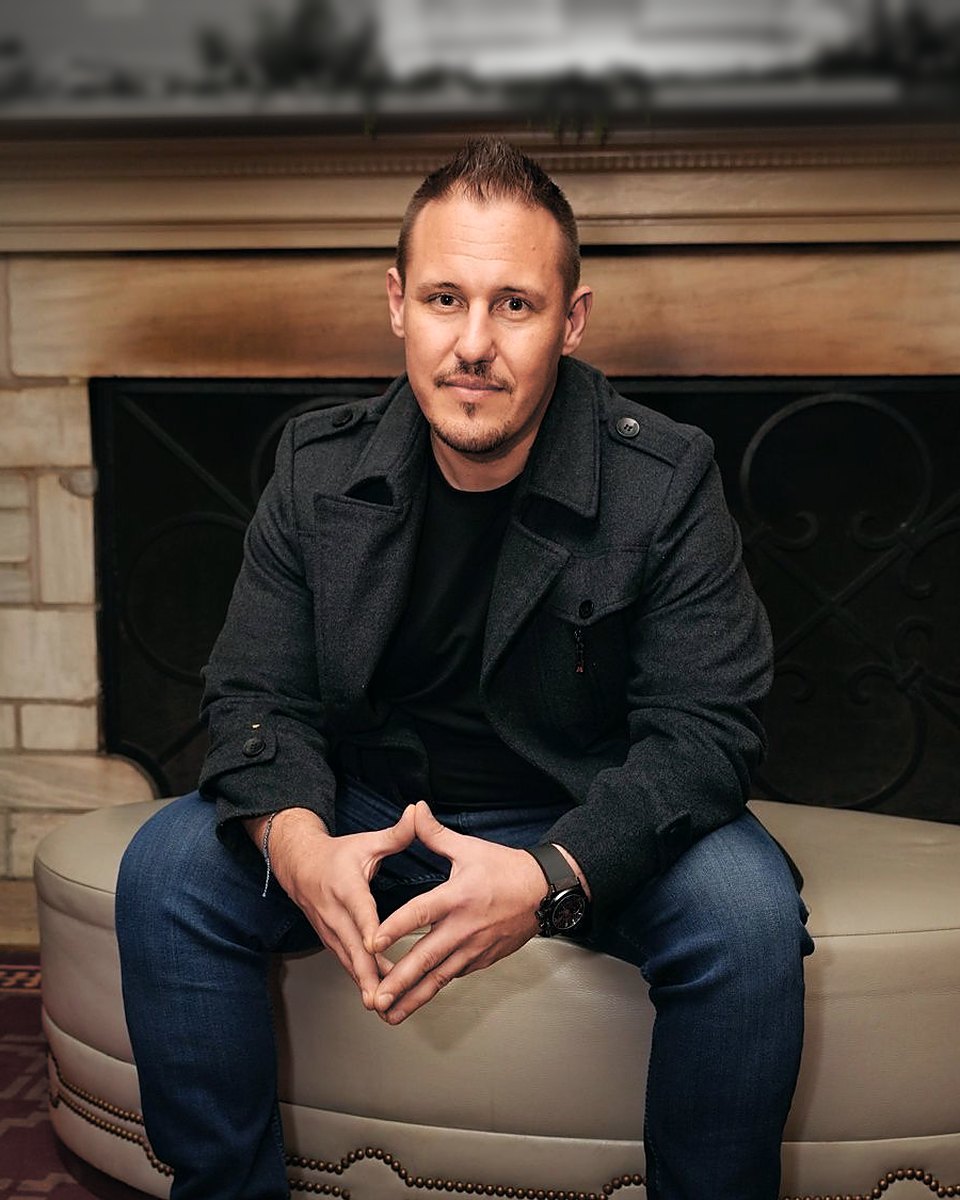
Dean DeVries, seated in front of a stone fireplace, hands clasped
A note from Dean

I've sat in your chair.

I've built companies, partnered in them, and carried payroll on weeks when the pipeline looked thin. I know how much of a company lives in its founder's head, and what that costs the people at home.

I'm a builder by temperament. I think in systems, and these days I build them with AI faster than most teams can write the spec. But the most important work I've done has been with people: helping a leader see the decision clearly, say the hard thing, and lead from conviction instead of fear.

I'm a father first. Faith shapes how I lead. I take on very few clients because I'd rather go deep with a handful of leaders than wide with many.

How it starts

Three steps, no pitch deck.

You'll know within a month whether we should work together, and you'll leave the diagnostic with something useful either way.

1

A conversation

We talk about the business, the team and you. I'll tell you directly whether I'm the right person, and point you elsewhere if I'm not.

60 minutes · private
2

The diagnostic

I go inside your CRM, your numbers and your leadership rhythm. You get a written finding: where revenue is leaking, what to build, and what it's worth.

Up to 7–14 days, depending on complexity · fixed fee
3

The engagement

We agree on the seats, the outcomes and the measures. Then I get to work alongside you and report against them every month.

Quarterly terms
Apply

Request a conversation.

Tell me a little about the company and what's prompting this. I read every application personally and reply within two business days.

What interests you
Your application stays between us. It isn't shared or added to a mailing list.